
Why “Just Cremate Me and Do Whatever Is Cheapest” May Create the Very Burden You Hoped to Spare Your Children From
Introduction
Parents spend a lifetime trying to protect their children.
It’s one of the reasons so many people tell their families, “Don’t spend money on me,” “Don’t make a fuss,” or “Just cremate me and sprinkle me somewhere.”
These wishes are usually rooted in love. People don’t want to create financial hardship. They don’t want to inconvenience their children. They don’t want to become a burden.
But after years of working in cemetery and funeral service, I’ve come to recognize a heartbreaking irony:
Many people who say they don’t want to burden their children may unintentionally create the very burden they hoped to avoid.
Grief Doesn’t Disappear Just Because We Remove Ritual
When someone dies, grief arrives whether a family planned for it or not.
The tears still come.
The empty chair at Thanksgiving still comes.
The birthdays, anniversaries, and quiet moments of longing still come.
What often disappears, however, are the things that help people navigate grief:
- A gathering of family and friends
- A meaningful ceremony
- A permanent place of remembrance
- A shared opportunity to honor a life
Funerals, memorials, and cemeteries do not create grief.
They help people carry it.
The Question Nobody Asks
In my experience, there is one question that rarely gets discussed when someone says, “Just cremate me.”
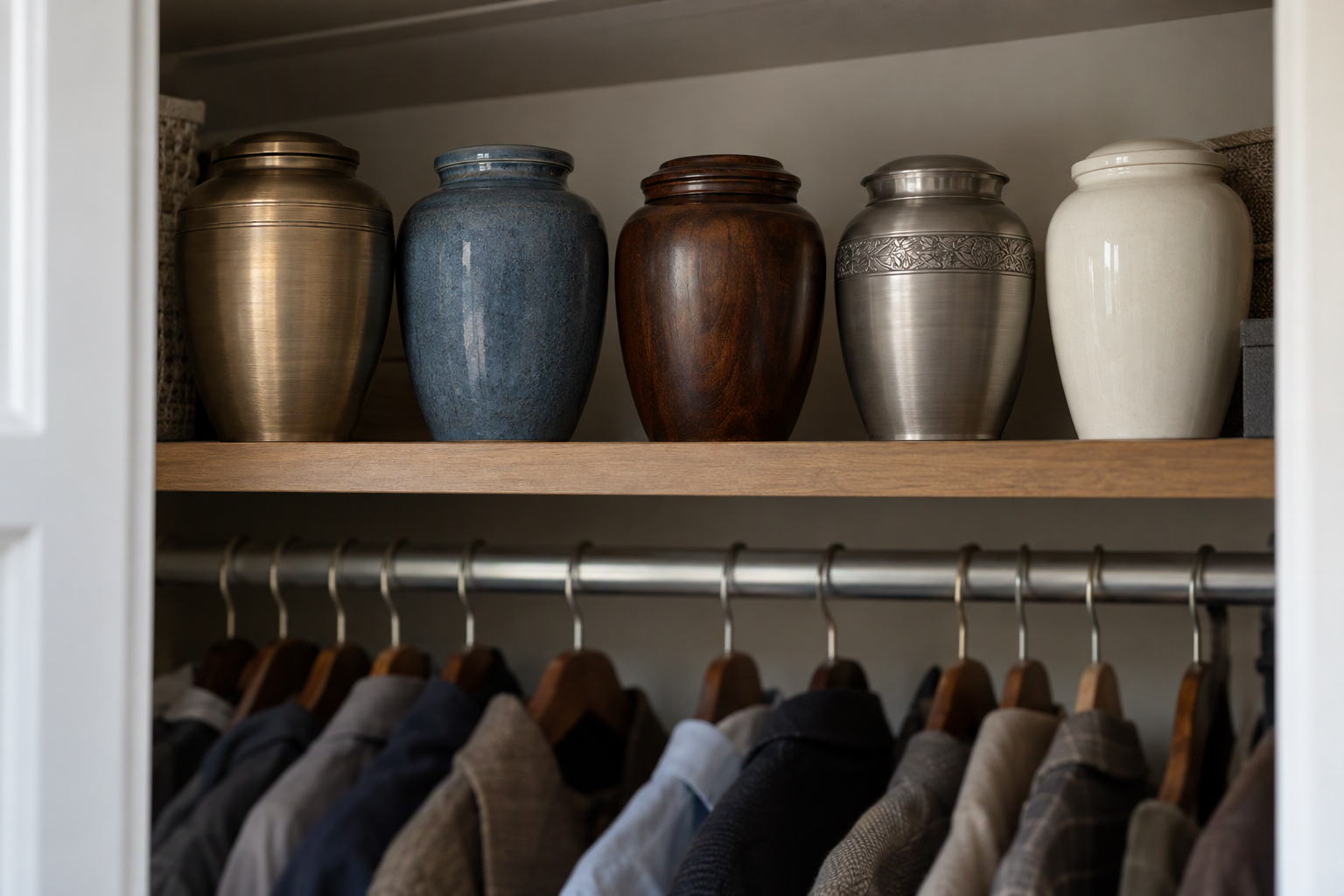
Twenty years later, who’s keeping the urn?
What happens after your children are gone?
Who inherits responsibility?
Which grandchild takes it?
What happens when someone moves across the country?
What happens when siblings disagree?
What happens when no one feels comfortable scattering the ashes, but no one knows what else to do?
I’ve met families carrying cremated remains from house to house for decades because nobody can bring themselves to make a final decision.
The burden wasn’t eliminated.
It was simply postponed.
Why Deathcare Professionals Think Differently
Most families naturally think about the people around them today.
Deathcare professionals don’t have that luxury.
We’re trained by experience to think in generations.
When someone tells me they want the simplest possible disposition, they’re typically thinking about their spouse or their children.
I’m also thinking about:
- The granddaughter who hasn’t been born yet.
- The great-grandson trying to understand his family history.
- The family historian looking for connections seventy-five years from now.
- The day when the last person who personally remembers that individual is gone.
Because we’ve seen what happens when there is no permanent point of remembrance.
We’ve met people searching for a grave, a marker, a memorial, or even a name, only to discover there is nothing left to find.
This Is Not an Argument Against Cremation
Let me be clear:
This is not an anti-cremation article.
In fact, I plan to be cremated myself.
The issue isn’t cremation.
The issue is intention.
If cremation reflects your beliefs, your values, or your family’s wishes, that’s a perfectly valid choice.
But if your primary motivation is “I don’t want to burden my kids,” it may be worth asking whether you’ve fully considered all the costs involved.
Because financial costs are only one type of cost.
There are also:
- Emotional costs
- Spiritual costs
- Relational costs
- Generational costs
Sometimes a decision that saves money today creates years, decades, or even generations of uncertainty for the people left behind.
Everyone Deserves to Be Remembered
One belief has only grown stronger throughout my career:
Everyone deserves to be remembered.
Everyone deserves a permanent memorial.
Not because the deceased need a place.
Because the living do.
One day, a granddaughter you never meet may want to know where her family story began.
One day, a great-grandson may want a place to stand and feel connected to those who came before him.
A permanent memorial gives future generations something invaluable:
Connection.
Continuity.
Belonging.
The Final Gift
The question is not whether your children will grieve.
They will.
The question is whether your decisions today will make that grief easier to carry or leave difficult choices lingering for decades after you’re gone.
You don’t stop being a burden by refusing to make a plan.
You stop being a burden by making one.
The final gift we leave our families isn’t less responsibility.
It’s clarity.
It’s permanence.
It’s a place to remember.